Christmas Cookie Crip Chronicle
As a special education teacher working at a drug and alcohol rehabilitation center that accepted students on Medicaid, many of the students I served came from environments marked by significant negative influences. These included generational gang involvement, parental substance abuse, peers met in detention facilities, and engagement in delinquent behaviors such as tagging and theft. My paraprofessional and I made it a priority to provide these students with positive, socially appropriate experiences. It was essential that they have opportunities to feel successful—academically, socially, and emotionally—as part of their recovery.
During the holiday season, we introduced students to a variety of cultural traditions. Our Jewish teacher led Hanukkah activities, students explored Mexican holiday customs, and we hosted Christmas-themed experiences, including decorating sugar cookies. Students were allowed to personalize their cookies in ways that reflected their identities and lived experiences.
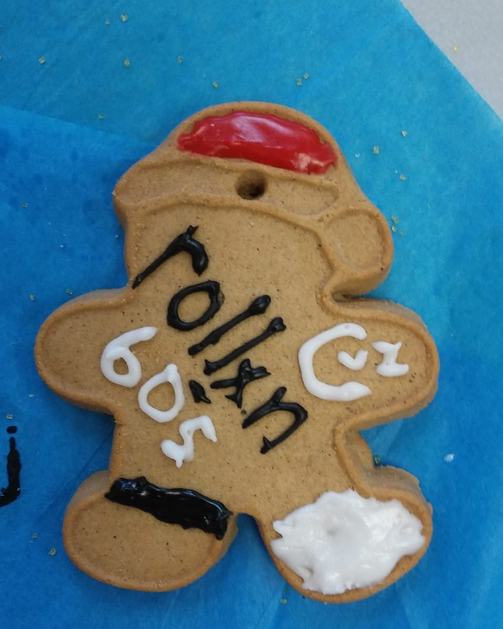
One 14-year-old student, who was wearing a court-mandated ankle monitor, created a cookie that included an ankle monitor as part of its design. He held it up proudly and exclaimed, “My cookie is fire!” He explained that since he would be wearing his monitor for several more months, he wanted his cookie to have one too.
What we later realized was that the student had embedded even deeper elements of his identity into his design. The “C” on the cookie represented the Crips, and the phrase “Rollxng 60’s” is connected to the Rollin’ 60s Neighborhood Crips—one of the largest and most well-known Crip sets in the United States, originating in Los Angeles and associated with a long history of criminal activity.
What we learned: This experience served as a powerful reminder: even in creative, light-hearted activities, students often reveal parts of their personal stories—sometimes more than they intend and more than we initially understand. Moments like this highlight the importance of providing safe spaces where students can express themselves, experience belonging, and begin to reshape their narratives in healthier ways.